 082-560489

Comprehensive Microfinance Operation and Capacity Building Training
May 25, 2026: Dang Ghorahi:
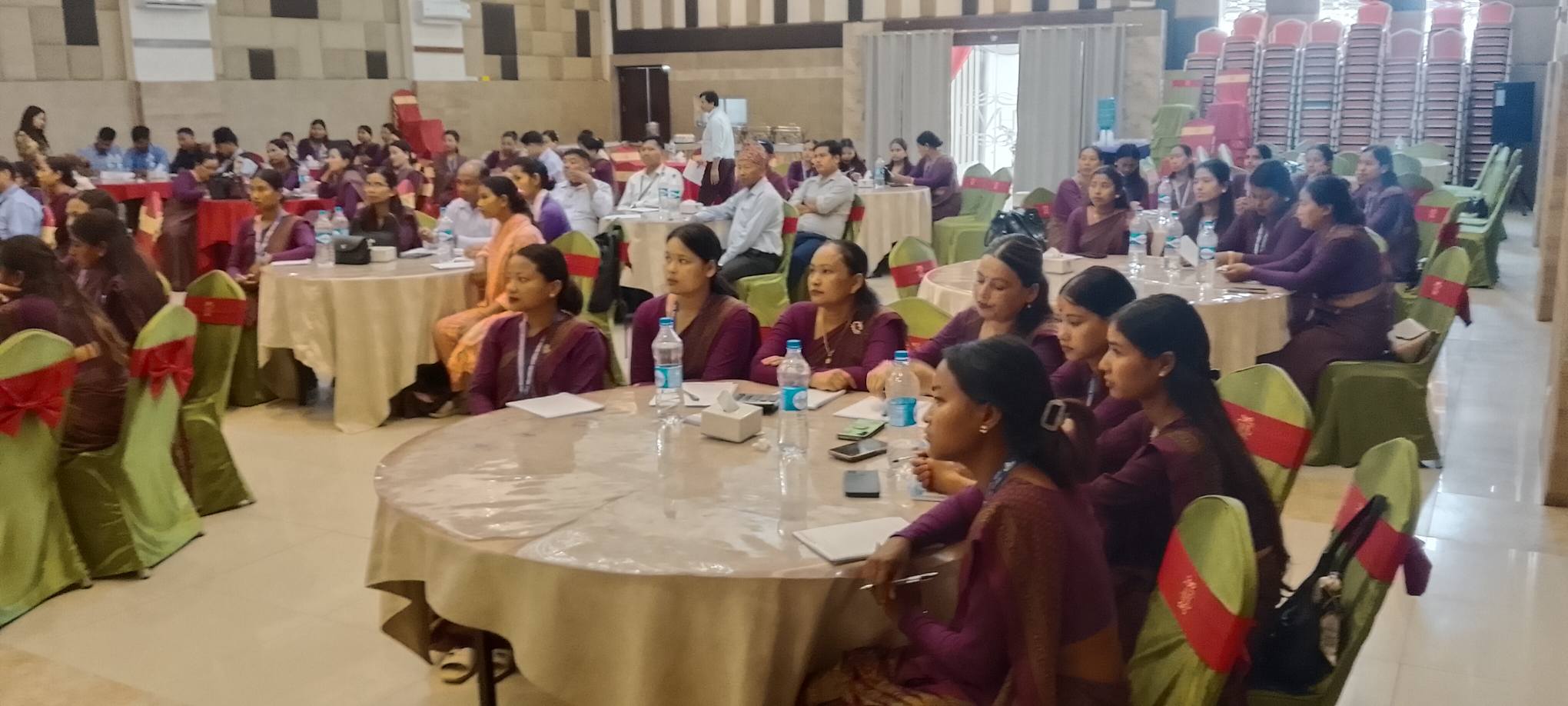
Aatmanirbhar Laghubitta Bittiya Sanstha Limited organized a two-day (May 23-24, 2026) training on Comprehensive Microfinance Operation and Capacity Building for its field staff at Mala Inn in Ghorahi. The trainings were delivered by various central senior staff, including Nirmal Chaudhary, Sushila Giri, Binay Chaudhary, and CEO Saugat Chaudhary. The program was moderated by HR Manager Kalidas Chaudhary.
A first-day training program on “Roles and Responsibilities of Personnel for the Progress of the Organization: Merits and Demerits of Personnel” was organized for the staff members of the Aatmanirbahar Laghubitta Bittiya Sanstha Limited (ALBS). The main aim of the training was to develop a better understanding among staff regarding their duties, responsibilities, professional behaviour, and contribution to the overall growth of the organization. The training also focused on the demerits and merits of the personnel.
The program participated by total of 90 staff members including branch managers, accountants, It personnel and marketing assistants and other staff from different branches, departments, and working levels of the institution. The session was facilitated by Hit Bahadur Thapa.
The training began with a brief introduction to the importance of human resources in organizational development. The facilitator explained that personnel are one of the most valuable assets of any institution. In the case of microfinance institutions, staff members have direct contact with clients and communities. Therefore, their attitude, discipline, honesty, communication skills, and work performance have a strong influence on the image, trust, and success of the organization.
The participants were made aware that the progress of an MFI depends not only on financial resources, rules, and policies, but also on the commitment and efficiency of its staff. Even well-designed policies cannot be successfully implemented without responsible and capable personnel. Staff members are the main link between the institution and its clients. They deliver services, explain rules, collect information, maintain records, monitor loan use, encourage repayment, and support clients in understanding financial services.
During the training, the facilitator discussed the major roles of MFI personnel. These include providing quality service to clients, supporting the loan process, encouraging savings habits, conducting field visits, monitoring loan utilization, maintaining proper documentation, and ensuring timely communication with clients. Staff members also play an important role in promoting financial discipline among clients and building a trustworthy relationship between the institution and the community.
The training also emphasized that MFI personnel should perform their work with honesty, fairness, and responsibility. They must follow the policies and procedures of the organization while carrying out their assigned duties. Transparency, accountability, confidentiality, and respectful behavior were highlighted as essential qualities for all staff members. The facilitator further explained that staff should avoid misuse of authority, discrimination, negligence, and any behavior that may harm the organization or its clients.
Another important part of the training was the discussion on the contribution of personnel to organizational progress. Responsible staff help improve service quality, strengthen client satisfaction, reduce operational risks, support loan recovery, and maintain the reputation of the institution. Good personnel also contribute to a positive working environment by cooperating with colleagues, sharing information, and working as a team. In microfinance, where trust and relationship-building are very important, the role of staff becomes even more significant.
The training further explained the merits of good personnel. Good personnel are honest, disciplined, punctual, responsible, hardworking, cooperative, and service-oriented. They communicate clearly with clients, listen to their problems, and provide proper guidance. They are also willing to learn, accept feedback, and improve their performance. Such employees help the organization achieve its goals by maintaining good client relations, reducing repayment problems, improving branch performance, and strengthening institutional sustainability.
Similarly, the demerits of ineffective personnel were also discussed. Irresponsible or careless staff can create many problems for the organization. Poor communication, weak documentation, lack of follow-up, dishonesty, conflict with clients, and poor teamwork can negatively affect institutional performance. Such behavior may result in client dissatisfaction, loan default, loss of trust, financial risk, and damage to the reputation of the organization. The facilitator explained that the negative behaviour of even one staff member can affect the performance and image of the whole branch or institution.
The training was conducted through power point presentation, lecture, group discussion, question-and-answer sessions, and sharing of field-level experiences. Participants actively took part in the discussion and shared the practical challenges they face in their daily work. Issues such as client handling, repayment collection, communication gaps, documentation errors, workload pressure, and coordination among staff were discussed. These discussions helped participants relate the training content to their actual working environment.
At the end of the training, participants understood that every staff member has an important role in the progress of the organization. They realized that organizational development is a collective responsibility and that each employee must contribute through sincerity, discipline, teamwork, and ethical conduct. The training helped participants understand that responsible personnel can create positive change, while irresponsible personnel can create serious problems for both clients and the institution.
The participants also expressed that the training was useful and practical. They mentioned that the session helped them reflect on their own roles and responsibilities more clearly. They also suggested that similar training programs should be organized regularly to improve staff capacity, motivation, and performance.
In conclusion, the training on “Roles and Responsibilities of Personnel for the Progress of the Organization: Merits and Demerits of Personnel” was effective and beneficial for MFI staff participants. It helped strengthen their understanding of professional duties, ethical behaviour, accountability, teamwork, and client-centered service. The training also made clear that committed and responsible personnel are essential for the sustainable progress of a microfinance institution.
Similarly, the second day training program on “Staff Capacity and Leadership and How to Adopt It” was organized for the staff members. The training was held at Mala Inn, Ghorahi. The program was facilitated by Mr. Hit Bahadur Thapa.
The main purpose of the training was to improve and refresh the knowledge, skills, confidence, and leadership ability of MFI staff. The training focused on how staff capacity and leadership can support better service delivery, institutional progress, and client satisfaction. It also helped participants understand how they can apply these qualities in their daily work.
The training started with an introduction to the meaning of staff capacity. Staff capacity refers to the ability of employees to perform their duties effectively. It includes knowledge, skills, attitude, discipline, communication, confidence, and commitment. In a microfinance institution, staff capacity is very important because staff members work directly with clients and communities. Their performance has a direct effect on the quality of services provided by the institution.
The facilitator explained that capable staff can carry out their duties in a proper and responsible way. They can explain financial products clearly, support loan processing, maintain records, collect repayments, and communicate well with clients. They can also identify problems in the field and report them on time. Strong staff capacity helps the institution provide better services and reduce operational risks.
The training also discussed the problems that may occur when staff capacity is weak. Lack of knowledge, poor communication, weak documentation, and careless work can create difficulties for both clients and the institution. These weaknesses may lead to client dissatisfaction, repayment problems, misunderstanding, and poor institutional performance. Therefore, regular capacity development is necessary for MFI staff.
Another major part of the training was leadership. The facilitator explained that leadership is not limited only to managers or senior staff. Every staff member can show leadership through responsible behaviour, discipline, initiative, and positive action. In the context of microfinance, leadership means guiding clients, supporting colleagues, solving problems, and working honestly for the progress of the organization.
The training made it clear that leadership is important for effective service delivery. MFI staffs often face different challenges in their daily work. These may include repayment delays, client complaints, group conflicts, communication problems, and field-level difficulties. Leadership skills help staff handle such situations in a calm and professional manner. A staff member with leadership qualities can make better decisions and support others during difficult situations.
The facilitator also explained how staff can adopt capacity and leadership in their regular duties. First, staff should clearly understand their roles and responsibilities. They should follow the rules, policies, and procedures of the institution. They should perform their work honestly, punctually, and with accountability. They should also keep proper records, prepare reports on time, and maintain transparency in their work.
Second, staff should continue learning. Capacity development is a continuous process. Staff can improve their capacity through training, field experience, guidance from senior staff, self-study, and feedback. They should be willing to learn new methods and improve their work performance. A positive learning attitude is very important for professional development.
Third, staff should develop good communication skills. Communication is a key part of microfinance service delivery. Staff must communicate with clients, group members, community people, and colleagues. They should use simple and respectful language. They should listen carefully to clients and provide correct information. Good communication helps build trust and reduces misunderstanding.
Fourth, staff should practice teamwork. An MFI cannot achieve its goals through the effort of one person only. The progress of the organization depends on cooperation among all staff members. Staff should support each other, share information, respect their colleagues, and work together to achieve common goals. Teamwork helps improve office performance and creates a positive working environment.
Fifth, staff should develop a sense of responsibility. Responsible staff complete their work on time and follow ethical practices. They do not misuse their position. They treat clients fairly and respectfully. They also protect the image and interest of the institution. Responsibility is one of the most important qualities of both capacity and leadership.
During the training, the facilitator also highlighted the importance of self-discipline. Self-discipline is the foundation of leadership. A disciplined staff member is punctual, honest, organized, and committed to work. Such a person can become an example for others. The training emphasized that leadership begins with personal behaviour before guiding others.
The training was conducted through lectures, presentations, group discussions, interaction, and experience sharing. Participants actively took part in the sessions. They shared their practical experiences from the field. They discussed issues related to client handling, loan recovery, documentation, communication, workload, and coordination among staff. These discussions made the training more practical and useful.
The participants learned that staff capacity and leadership are closely related. Capacity helps staff perform their duties effectively. Leadership helps them take initiative, guide others, and solve problems. Both qualities are necessary for improving the quality of microfinance services. The training also helped participants understand that every staff member has a role in the progress of the organization.
At the end of the training, the participants expressed that the program was useful and relevant to their work. They stated that the training helped them understand the value of knowledge, discipline, teamwork, communication, and leadership. They also showed interest in applying the learning in their daily responsibilities.
In conclusion, the training on “Staff Capacity and Leadership and How to Adopt It”, held on May 23–24, 2026, at Mala Inn, Ghorahi, was successful and meaningful for MFI staff participants. Under the facilitation of Mr. Hit Bahadur Thapa, the program helped participants improve their understanding of capacity development and leadership practices. The training showed that capable and responsible staff with leadership qualities are essential for the growth and sustainability of a microfinance institution.